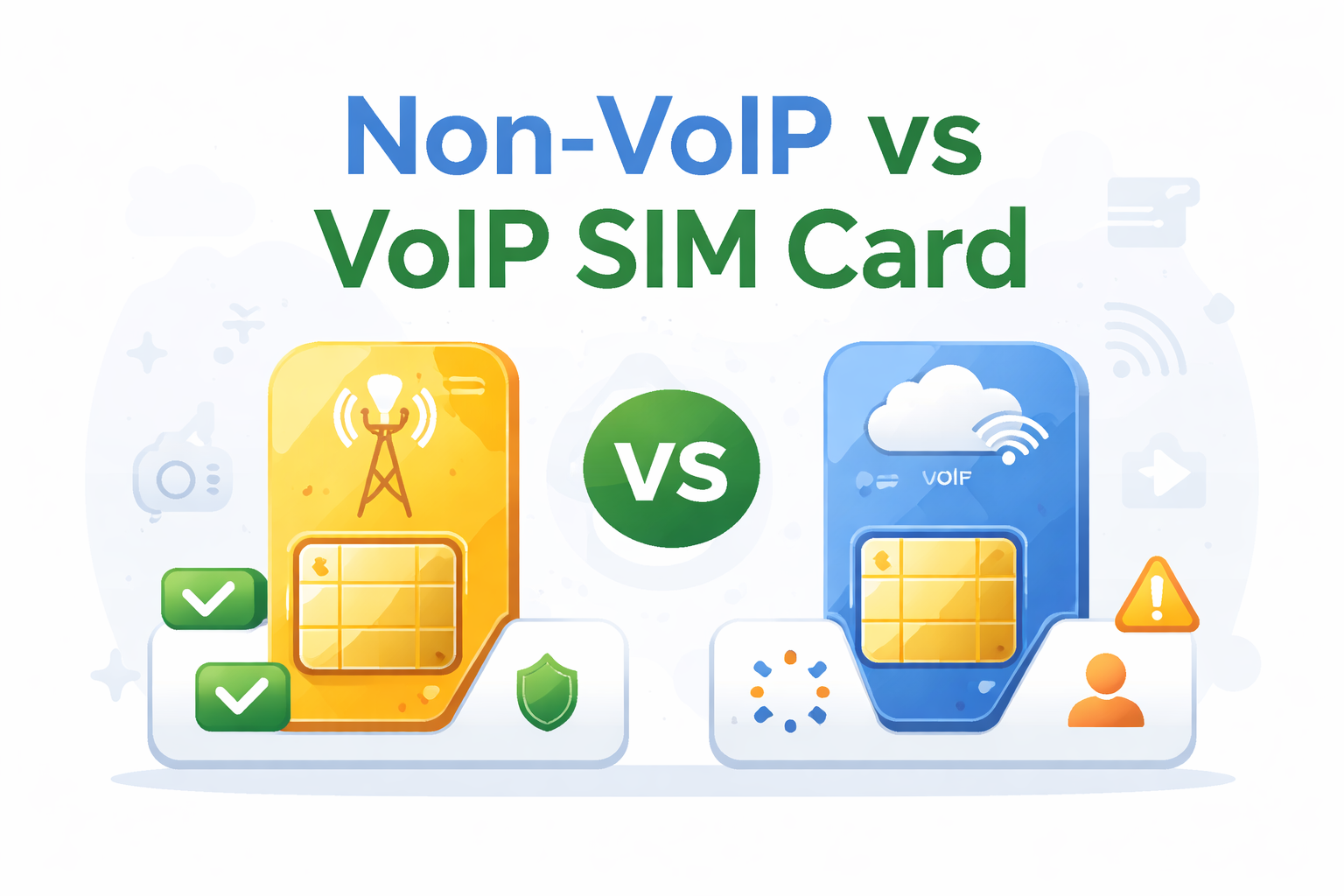
Difference Between Non-VoIP vs VoIP SIM Card (Simple Guide for 2026)
Understanding the difference between non-VoIP vs VoIP SIM cards is crucial if you’ve ever struggled with OTP verification, account sign-ups, or business communication.
In simple terms, non-VoIP SIM cards use real mobile carrier networks, while VoIP numbers rely on the internet. This difference affects reliability, security, and whether platforms like banks or apps accept your number.
In this guide, you’ll learn exactly how they work, why websites treat them differently, and which one you should choose.
What Is a Non-VoIP SIM Card?
A non-VoIP SIM card is a regular SIM issued by a mobile network operator (like your standard phone SIM).
How it works:
- Uses cellular networks (GSM/LTE/5G)
- Connected to a telecom carrier
- Calls and SMS are routed through carrier infrastructure
Key features:
- Works on all phones without internet
- Highly reliable for SMS and OTP verification
- Fully traceable to a carrier and user identity
- Accepted by banks, apps, and secure platforms
Example: Your personal mobile number from a telecom provider.
What Is a VoIP SIM Card (or VoIP Number)?
A VoIP (Voice over Internet Protocol) number is not tied to a traditional SIM. Instead, it uses the internet to make and receive calls.
How it works:
- Runs through internet-based systems
- Managed via apps, cloud platforms, or software
- Can work on phones, laptops, or tablets
Key features:
- Often cheaper or even free
- Easy to create and discard
- Not always tied to a physical identity
- May not support SMS or OTP reliably
Examples: Numbers from apps like Skype, Google Voice, or virtual number providers.
Key Differences Between Non-VoIP and VoIP SIM
- Network: Non-VoIP SIMs operate on cellular carrier networks, while VoIP numbers rely entirely on internet connectivity.
- SMS & OTP Reliability: Non-VoIP SIMs provide highly reliable OTP delivery, whereas VoIP numbers may experience delays or blocking.
- Traceability: Non-VoIP SIMs are typically linked to verified identities, while VoIP numbers offer more flexibility and anonymity.
- Cost: Non-VoIP SIMs are generally more expensive, while VoIP numbers are cost-effective.
- Security: Non-VoIP SIMs offer stronger security, especially for financial apps, compared to VoIP numbers.
- Use Cases: Non-VoIP SIMs are best for personal and secure usage, while VoIP numbers suit business and remote operations.
Why Many Websites Reject VoIP Numbers
Many platforms actively restrict or block VoIP numbers, and it’s not random. These systems are designed to protect users, reduce fraud, and ensure reliable communication.
1. OTP Delivery Is Less Reliable
One of the biggest issues with VoIP numbers is inconsistent OTP (one-time password) delivery.
Messages may:
- Arrive late
- Fail completely
- Get filtered by VoIP providers
For platforms that depend on instant verification, this creates a poor user experience.
2. Higher Risk of Fraud and Abuse
VoIP numbers are easy to create, often without strict identity checks. This makes them attractive for:
- Bulk account creation
- Spam registrations
- Scams and automated abuse
Because of this, many websites treat VoIP numbers as high-risk by default.
3. Advanced Detection Systems
Modern platforms use smart detection tools to identify VoIP numbers. These systems can:
- Recognize known VoIP providers
- Flag virtual or cloud-based number ranges
- Analyze unusual signup patterns
Services like banking apps, Google accounts, and messaging platforms often rely on these checks to maintain security.
Get Non-VoIP Numbers Instantly for OTP Verification
If you’ve ever had a VoIP number rejected during sign-up, you already know how frustrating it can be. Many platforms now require real carrier-based (non-VoIP) numbers to ensure security and prevent abuse.
That’s where VerifySMS comes in.
Instead of buying a physical SIM or exposing your personal number, services like VerifySMS let you access non-VoIP numbers online, on demand, specifically designed for verification purposes.
Why This Approach Works
- Uses real, carrier-backed numbers (not typical VoIP)
- Works with platforms like WhatsApp, Telegram, Google, and more
- Lets you receive OTP codes instantly without delays
- Keeps your personal number private
When to Use It
VerifySMS is especially useful when:
- Your VoIP number gets blocked
- You need multiple verifications
- You don’t want to share your personal number
- You need numbers from different countries
How It Fits Into VoIP vs Non-VoIP
You can think of it as a hybrid solution:
- You get the convenience of online access (like VoIP)
- But the reliability of non-VoIP carrier numbers
Pros and Cons of Non-VoIP and VoIP Numbers
Non-VoIP SIM
Pros:
- Works everywhere (banks, apps, services)
- Reliable SMS and OTP delivery
- Higher trust and security
Cons:
- More expensive
- Requires a physical SIM and a carrier
VoIP Numbers
Pros:
- Low cost or free
- Flexible and easy to set up
- Great for international communication
Cons:
- Often blocked by websites
- OTP may fail
- Lower trust level
Common Myths
VoIP numbers are fake!
Not fake, but they are virtual and less trusted.
VoIP SIM works like a normal SIM!
No. It depends on the internet, not a carrier.
All numbers can receive OTP!
False. Many platforms block VoIP numbers.
Frequently Asked Questions
Can VoIP numbers receive OTP?
Sometimes, but many websites block them due to security risks.
Is VoIP legal?
Yes, VoIP is legal in most countries, but usage rules may vary.
Can I convert a VoIP number into a non-VoIP number?
No, you cannot directly convert a VoIP number into a non-VoIP number. They operate on different systems; one uses the internet, and the other uses a telecom carrier network.
How can I tell if a number is VoIP or non-VoIP?
You can check using online lookup tools or by testing it on platforms that require OTP verification. If the number gets rejected or fails to receive SMS codes, it’s likely a VoIP number.
The Bottom Line
The difference between non-VoIP vs VoIP SIM cards comes down to trust vs flexibility.
- Non-VoIP numbers are reliable, secure, and widely accepted.
- VoIP numbers are cheaper and more flexible, but often restricted.
If your goal is account security and smooth verification, non-VoIP is the clear winner. If you need cost-effective communication, VoIP still has its place.
In case you’re facing issues with OTP verification or blocked numbers, you may try VerifySMS, as a reliable service that offers access to real non-VoIP numbers for instant verification.